AI-Powered Customer Leads: Hunting Smarter, Not Harder

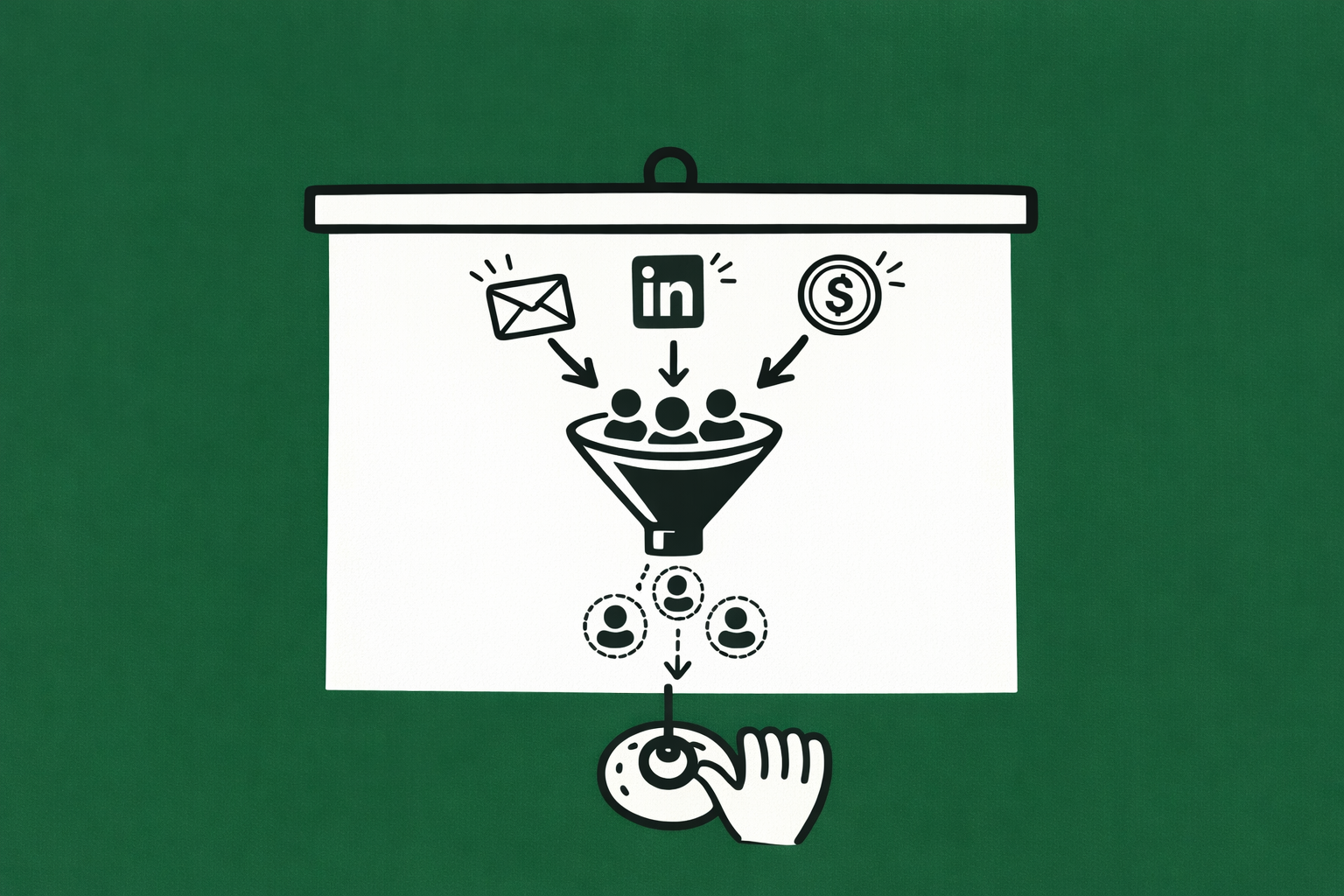
Transform your B2B lead generation with AI. Discover how to identify high-intent customer leads using social listening and buyer intent signals.
Are you tired of sifting through endless lists of leads that never convert? The old methods of lead generation are becoming increasingly inefficient. Today's B2B landscape demands a smarter approach – one that leverages the power of AI to identify and engage with high-intent customer leads. This article explores how AI is revolutionizing lead hunting, enabling businesses to focus on prospects who are genuinely interested in their solutions.
We'll delve into the specifics of how AI-driven platforms like HuntingAlice are transforming lead discovery. By using social listening and analyzing buyer intent signals, these platforms actively hunt for and surface the most promising leads, saving you time and resources while boosting your conversion rates. Let's explore how to leverage AI to transform your lead generation efforts.
The Problem with Traditional Lead Generation
Traditional lead generation methods often rely on outdated tactics like cold calling, purchased lists, and generic marketing campaigns. These approaches are not only time-consuming but also yield low conversion rates. The core issue is a lack of focus: these methods cast a wide net, capturing many unqualified leads while missing the high-intent prospects who are actively seeking solutions.
Consider the scenario of a B2B software company. They might purchase a list of contacts in their target industry and blast them with generic email campaigns. While this might generate some initial interest, the vast majority of these leads will be unresponsive or unqualified. This wastes valuable time and resources for the sales team, who are forced to spend their time sifting through irrelevant leads instead of focusing on genuine opportunities. The result is a sales pipeline clogged with dead ends and a frustrated sales team.
Furthermore, traditional methods often fail to capture the nuances of buyer behavior. They rely on static data points and demographic information, neglecting the dynamic signals of intent that can indicate a prospect's readiness to buy. This is where AI-powered lead hunting offers a significant advantage.
How AI Hunter Platforms Transform Lead Discovery
AI Hunter platforms like HuntingAlice offer a fundamentally different approach to lead discovery. Instead of passively waiting for leads to come to you, these platforms actively hunt for prospects who are exhibiting strong buyer intent signals. This proactive approach is powered by sophisticated AI algorithms that analyze vast amounts of data from various sources, including social media, online forums, and industry publications.
The key difference lies in the ability to identify leads based on their behavior rather than just their demographics. For example, if a prospect is actively engaging in discussions about a specific problem that your product solves, an AI Hunter platform will flag them as a high-intent lead. This allows your sales team to focus their efforts on prospects who are already actively seeking a solution, dramatically increasing the chances of conversion.
AI-driven lead discovery also eliminates the need for manual data entry and tedious research. The platform automates the process of identifying and qualifying leads, freeing up your sales team to focus on building relationships and closing deals. This translates to increased efficiency, higher conversion rates, and a more productive sales organization.
Uncovering Buyer Intent Signals with AI
Buyer intent signals are the digital breadcrumbs that prospects leave behind as they research and evaluate potential solutions. These signals can take many forms, including social media posts, forum discussions, online reviews, and website visits. Identifying and interpreting these signals is crucial for effective lead hunting, and AI is uniquely suited to this task.
AI algorithms can analyze vast amounts of unstructured data to identify patterns and trends that indicate buyer intent. For example, if a prospect is consistently engaging with content related to a specific topic, or if they are actively participating in discussions about a particular problem, this could be a strong indication that they are in the market for a solution. HuntingAlice uses social listening for leads to detect these signals across multiple platforms.
Furthermore, AI can also help to prioritize leads based on the strength of their intent signals. Leads who are exhibiting multiple strong signals are more likely to be ready to buy than those who are only showing weak signals. By focusing on the highest-intent leads, your sales team can maximize their chances of success and avoid wasting time on unqualified prospects. This allows for a more targeted and efficient sales approach.
Building Effective Lead Hunting Workflows with AI
Implementing AI-powered lead hunting requires a strategic approach to building effective workflows. This involves defining your target audience, identifying relevant buyer intent signals, and configuring your AI Hunter platform to automatically identify and qualify leads. The goal is to create a seamless process that delivers high-quality leads directly to your sales team.
Start by clearly defining your ideal customer profile. What are their key characteristics, pain points, and goals? This will help you to identify the most relevant buyer intent signals to track. For example, if you're selling a marketing automation platform, you might want to track mentions of specific marketing challenges, discussions about competitor products, or requests for recommendations on marketing tools.
Next, configure your AI Hunter platform to monitor these signals across various online channels. This might involve setting up keyword alerts, tracking specific hashtags, or monitoring relevant industry forums. The platform should automatically identify and qualify leads based on the strength and relevance of their intent signals. HuntingAlice excels at creating these lead hunting workflows.
Finally, integrate your AI Hunter platform with your existing sales tools to ensure a seamless flow of information. This will allow your sales team to quickly access lead data, track their interactions, and manage their pipeline effectively. By automating the lead hunting process, you can free up your sales team to focus on building relationships and closing deals.
Measuring the ROI of AI-Powered Lead Hunting
Measuring the return on investment (ROI) of AI-powered lead hunting is crucial for justifying the investment and demonstrating its value to stakeholders. While traditional lead generation metrics like lead volume and cost per lead are important, they don't tell the whole story. To accurately assess the ROI of AI-powered lead hunting, you need to focus on metrics that reflect the quality and conversion potential of the leads generated.
Key metrics to track include: conversion rate, sales cycle length, and customer lifetime value. AI-powered lead hunting should result in higher conversion rates, as the leads generated are more likely to be qualified and ready to buy. It should also shorten the sales cycle, as the sales team can focus their efforts on prospects who are already actively seeking a solution. Finally, it should increase customer lifetime value, as the leads generated are more likely to become loyal and profitable customers.
To calculate the ROI, compare the performance of your sales team before and after implementing AI-powered lead hunting. Track the changes in the key metrics mentioned above and calculate the resulting increase in revenue. Then, subtract the cost of the AI Hunter platform to determine the net profit. This will give you a clear picture of the financial benefits of AI-powered lead hunting.
The Future of Customer Leads is AI-Driven
The future of customer leads is undoubtedly AI-driven. As the volume of online data continues to grow, traditional lead generation methods will become increasingly ineffective. Businesses that embrace AI-powered lead hunting will gain a significant competitive advantage by identifying and engaging with high-intent prospects more efficiently and effectively.
AI will continue to evolve and improve, becoming even more sophisticated at identifying and interpreting buyer intent signals. This will enable businesses to personalize their sales and marketing efforts to an even greater extent, resulting in higher conversion rates and stronger customer relationships. The ability to leverage social listening for leads and other intent signals will be paramount.
Furthermore, AI will also play a crucial role in predicting future customer needs and behaviors. By analyzing historical data and identifying patterns, AI can help businesses to anticipate customer demand and proactively offer solutions. This will enable them to stay ahead of the curve and maintain a competitive edge in the ever-changing B2B landscape. Embracing AI-powered lead hunting is no longer a luxury, but a necessity for businesses that want to thrive in the future.
Conclusion
AI-powered lead hunting represents a paradigm shift in how B2B companies find and engage with potential customers. By leveraging AI to identify buyer intent signals and automate lead discovery, businesses can significantly improve their sales efficiency, conversion rates, and overall ROI. The key takeaways are that AI Hunter platforms actively hunt for high-intent leads, enabling sales teams to focus on genuine opportunities, and that measuring the ROI of AI-powered lead hunting requires focusing on metrics that reflect the quality and conversion potential of the leads generated. The future of customer acquisition is undoubtedly AI-driven, and businesses that embrace this technology will be well-positioned for success.